
Contact Us
01 864 5119
M50 Exit 5! D11PC44
Orders over €599
Within 1 Hour
Guaranteed

Choosing a bathroom tap is about more than finding a style you like. The right tap needs to work with your basin or bath, suit your water pressure, fit the available space and complement the rest of your bathroom.
Whether you're replacing an existing tap or designing a new bathroom, this guide will help you understand what to look for before you buy.
Before choosing a bathroom tap, check a few key details to make sure your new tap is suitable for your bathroom.
First, decide where the tap will be installed. Basin taps and bath taps have different designs, sizes and water flow requirements.
Check how many tap holes your basin or bath has. A single-hole basin is usually designed for a basin mixer, while a two-hole basin may require pillar taps or a suitable two-hole tap configuration.

Your home's water pressure can affect which taps are suitable. Always check the minimum operating pressure listed in the product specifications before purchasing.
The size of your tap should work with the size and shape of your basin. The tap needs to provide enough clearance for comfortable use without causing water to splash against the basin.

Think about how the tap will look alongside your basin, shower, bath fittings and bathroom accessories. Chrome, matt black, brushed brass and other finishes can create very different looks.
Check how the tap is installed and whether you need any additional components, such as flexible hoses, wastes or fixing kits.

Bathroom taps come in several different styles. The right choice depends on your basin or bath, your bathroom layout and the look you want to achieve.
A basin mixer combines hot and cold water through a single tap and is one of the most popular choices for modern bathrooms.
They are generally designed for basins with one tap hole and are available in a wide range of styles and finishes.
Pillar taps are supplied as a pair, with separate taps for hot and cold water. They are commonly used with two-hole basins and are a popular choice for traditional-style bathrooms.
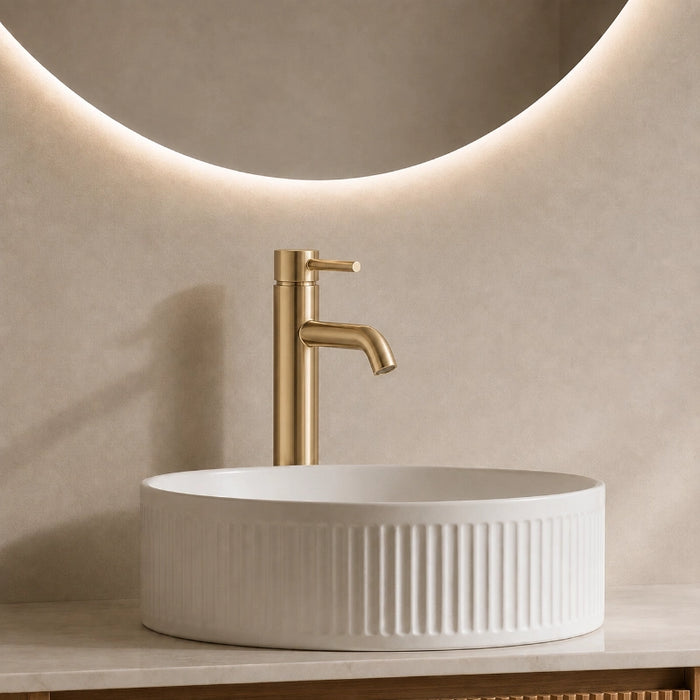
Tall basin mixers are designed for use with countertop basins, where the basin sits above the worktop rather than being recessed into it.
The additional height allows the spout to reach comfortably over the rim of the basin.
Wall-mounted taps are fixed directly to the wall behind the basin rather than to the basin or worktop.
They can create a clean, minimalist appearance and are particularly useful when paired with countertop basins.

Bath fillers are designed specifically for filling a bath and are available in different configurations, including deck-mounted and freestanding options.
A bath shower mixer combines a bath filler with a hand shower, making it possible to fill the bath and shower using the same fitting.
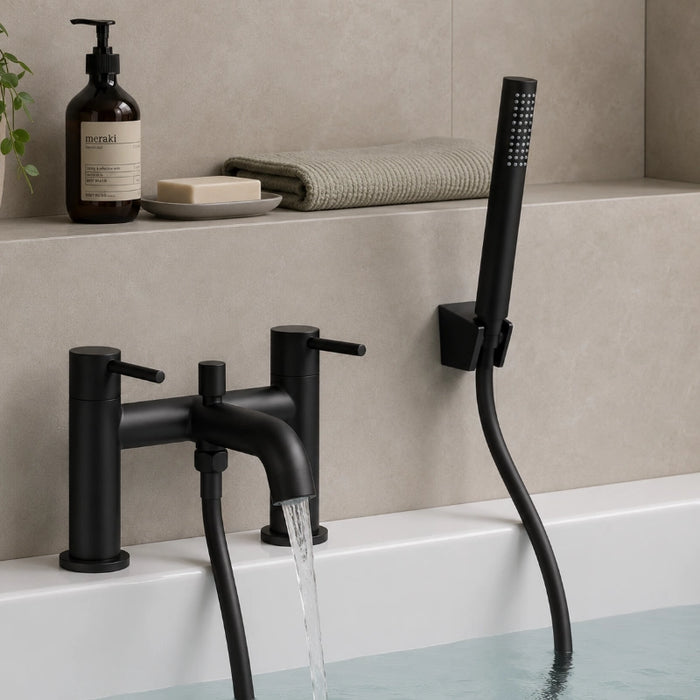
Freestanding bath taps are designed to stand on the floor next to a freestanding bath.
They are particularly suited to modern freestanding baths where there is no suitable tap deck on the bath itself. Because of their height and position, it is important to check the dimensions and spout reach before installation.
Choosing a tap and basin separately can sometimes result in compatibility problems. Before buying, consider the basin type, tap height, spout reach and number of tap holes.
Countertop basins sit on top of a worktop or vanity unit, so they usually require either a tall basin mixer or a wall-mounted tap.
A standard basin mixer may be too short to comfortably reach over the basin.
Inset basins are fitted into a worktop or vanity unit. A standard basin mixer is often suitable, provided the tap dimensions are compatible with the basin.
Semi-recessed basins extend beyond the front of the vanity unit. Depending on the basin design, a standard or compact basin mixer may be suitable.
Always check the tap-hole position and dimensions before purchasing.
Cloakroom basins are smaller than standard basins and are designed for compact spaces.
A compact basin mixer is often a better choice because an oversized tap can look disproportionate and may cause water to land too close to the edge of the basin.
Wall-hung basins can be paired with a basin mixer or wall-mounted tap, depending on the basin's design and tap-hole configuration.
The number and position of the tap holes are just as important as the tap's appearance.
As a general guide:
1 tap hole: usually suitable for a mono basin mixer
2 tap holes: suitable for pillar taps or certain two-hole configurations
No tap hole: may be suitable for a wall-mounted tap
Always check the individual basin and tap specifications before ordering.
Tap size is one of the most important things to consider when choosing a bathroom tap.
A tap that is too short may not extend far enough over the basin, while a tap that is too tall or has too much reach can result in uncomfortable positioning or water splashing.
There are three key measurements to consider:
Tap height is the distance from the base of the tap to the highest point of the tap.
For a standard inset basin, a standard-height mixer is often suitable.
For a countertop basin, a taller mixer is generally required because the basin sits above the worktop.
Spout reach refers to how far the tap extends forward from its base.
The spout should extend far enough into the basin for the water to fall in a practical position.
A tap with too little reach may direct water too close to the back of the basin, while excessive reach can send water too close to the front edge.
The depth and shape of your basin also affect which tap will work best.
Before purchasing, consider where the water stream will land when the tap is running. Ideally, the water should fall comfortably inside the basin without hitting the basin wall or creating excessive splashing.
Tip: If you're buying a tap for a countertop basin, don't compare tap height alone. Consider the height of the basin itself and the distance from the worktop to the basin's rim.
Water pressure is another important consideration when choosing a bathroom tap.
Some taps are designed to work with low-pressure systems, while others require higher water pressure to provide the expected flow rate.
Water pressure is commonly measured in bar.
Before buying a tap, check the product specifications for its minimum operating pressure. If you're unsure about your home's water pressure, it's worth checking your existing system or asking a qualified plumber.
Choosing a tap that is not suitable for your water pressure can result in disappointing water flow.
Once you've found a tap that fits your basin, you can choose the finish that best suits your bathroom design.
Chrome is a timeless option that works well with a wide range of bathroom styles. It is particularly easy to coordinate with other chrome bathroom fittings.
Matt black taps create a bold, contemporary look and work particularly well with modern bathrooms and monochrome colour schemes.
Brushed brass adds warmth and a more luxurious feel to a bathroom. It can work especially well with neutral colours, natural stone and warm-toned interiors.
Gunmetal taps offers a softer alternative to polished chrome and can work well in both contemporary and traditional bathrooms.
For a coordinated bathroom, consider matching your tap finish with other visible fittings such as:
You don't necessarily need every fitting to be identical, but keeping the finishes coordinated can help create a more cohesive look.
When space is limited, the size and proportions of your tap become particularly important.
For a small bathroom or cloakroom, consider:
Avoid choosing a tap simply because it looks good in a photograph. Check the dimensions carefully to make sure it works with your basin.
A large tap paired with a small basin can look disproportionate and may make the basin less practical to use.
Different taps offer different features. Some are mainly aesthetic, while others can improve everyday usability.
Ceramic cartridges are commonly used in modern mixer taps and can provide smooth control of water temperature and flow.
A tap aerator mixes air with the water stream. This can help create a softer, more controlled flow and may help reduce water consumption.
A swivel spout can provide additional flexibility, although this feature is more commonly associated with kitchen taps. Where available, consider whether the additional movement is useful for your particular basin or bath.
Waterfall taps allow water to flow over a wider opening, creating a distinctive visual effect. They are often chosen for their contemporary appearance.
Single-lever basin mixers allow you to control water flow and temperature using one handle, making them convenient for everyday use.
Not all bathroom taps come with a basin waste, so don't assume that one is included.
If you are replacing your basin tap, check the product description carefully to see what is included.
You should also make sure the waste is compatible with your basin. For example, if your basin has an overflow, you may need a waste designed for use with an overflow.
Checking this before ordering can help you avoid buying additional parts later.
Before buying your new bathroom tap, check:
☐ Is it designed for a basin or bath?
☐ How many tap holes does your basin have?
☐ Is the tap suitable for your water pressure?
☐ Is the tap tall enough for your basin?
☐ Is the spout reach suitable?
☐ Where will the water land in the basin?
☐ Does the finish match your bathroom style?
☐ Does it fit the available space?
☐ Is a waste included?
☐ Are any additional installation components required?
The best bathroom tap isn't necessarily the most expensive or the most stylish one. It is the one that works with your basin, water pressure, available space and bathroom design.
Take a few minutes to check the dimensions and specifications before ordering, and you'll have a much better chance of finding a tap that looks great and works exactly as it should.
Explore our range of bathroom taps, including basin mixers, pillar taps, tall basin mixers, bath taps and freestanding options, to find the right fit for your bathroom.
