
Contact Us
01 864 5119
M50 Exit 5! D11PC44
Orders over €699
Within 1 Hour
Guaranteed

Choosing the right radiator is about more than simply keeping your home warm. The size, shape and position of your radiator can affect how you use your space, where you place furniture and how your room looks.
Two of the most popular options are vertical radiators and horizontal radiators. But which one is right for your home?
The answer depends on your available wall space, room layout, required heat output and personal style. In this guide, we compare vertical and horizontal radiators to help you make the right choice.
| Feature | Vertical Radiator | Horizontal Radiator |
|---|---|---|
| Shape | Tall and narrow | Wide and low |
| Best suited to | Narrow or limited wall space | Wide, open wall space |
| Space efficiency | Makes better use of vertical wall space | Makes use of horizontal wall space |
| Furniture placement | Can leave more horizontal wall space available | Can take up more wall width |
| Style | Often modern and contemporary | Traditional, minimalist or modern |
| Common locations | Hallways, kitchens, bathrooms, bedrooms | Living rooms, bedrooms, dining rooms |
| Under-window installation | Less common | Very common |
| Design impact | Can create a strong focal point | Can blend easily into the room |
| Heat output | Depends on size, design and specification | Depends on size, design and specification |
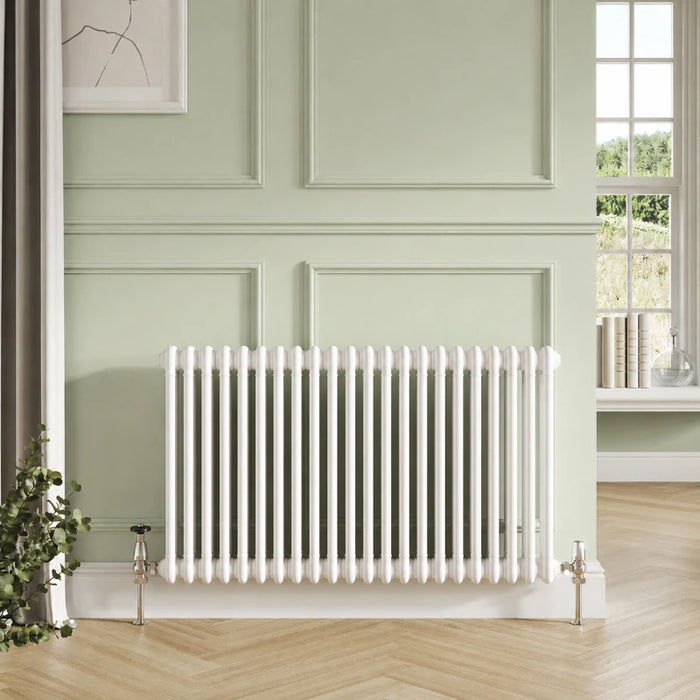
A horizontal radiator is the traditional radiator shape that most people are familiar with. It is wider than it is tall and is commonly positioned underneath a window or along a low section of wall.
Because horizontal radiators are available in a wide range of sizes and styles, they can work well in everything from traditional homes to contemporary interiors.
Ideal for wide wall spaces
If you have plenty of horizontal wall space available, a horizontal radiator can make excellent use of it without taking up unnecessary vertical space.
A familiar and versatile choice
Horizontal radiators are a popular choice for living rooms, bedrooms and other areas where a conventional radiator position is already available.
Great for under-window installation
A horizontal radiator can fit naturally beneath many windows, making it a practical option when the existing radiator position is already there.
Wide range of designs
From simple panel radiators to designer and column styles, horizontal radiators are available in many different finishes and designs.
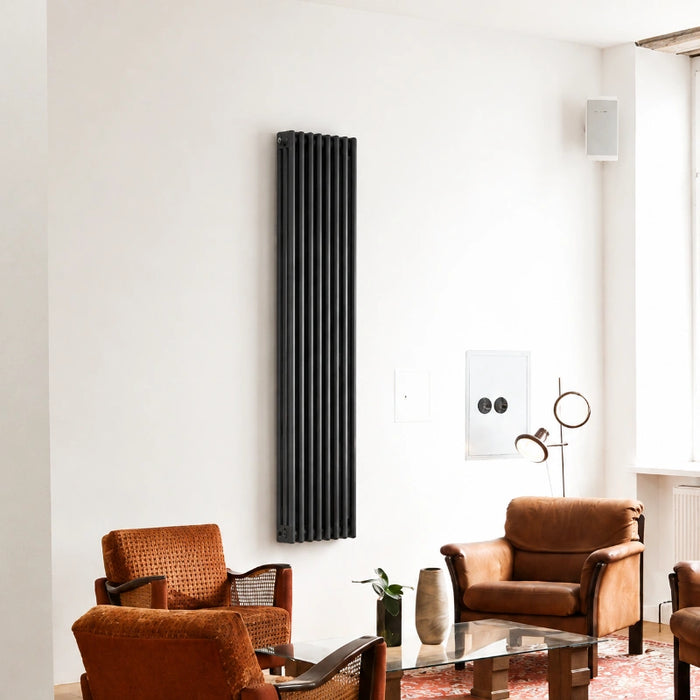
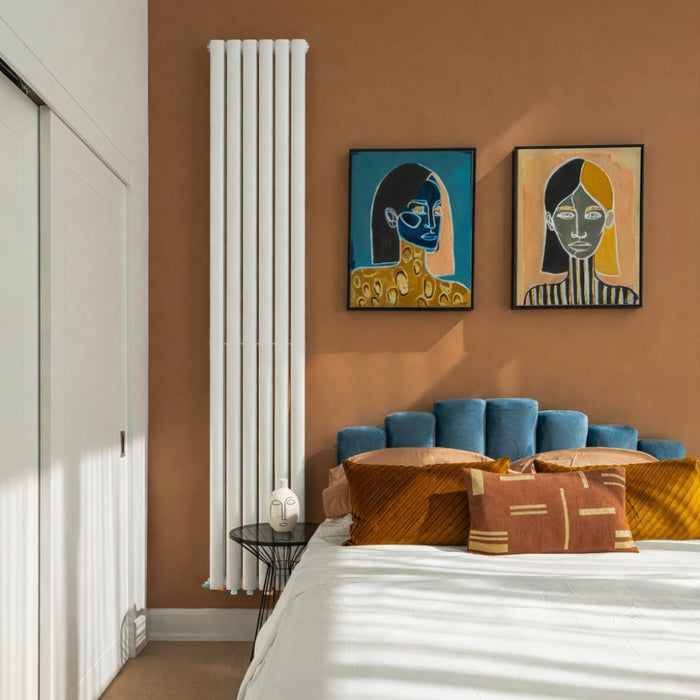
A vertical radiator is taller and narrower than a conventional horizontal radiator. Instead of spreading across the wall, it uses more of the wall's height.
This makes vertical radiators particularly useful when horizontal wall space is limited. They can also add a distinctive architectural feature to a room.
Makes better use of narrow wall space
A vertical radiator can fit into spaces where a wide radiator may not be practical.
Frees up horizontal wall space
Because the radiator takes up less wall width, you may have more flexibility when positioning furniture, storage or other features.
Ideal for modern interiors
Vertical radiators often have a sleek, contemporary appearance and can become a design feature rather than simply a functional heating product.
Useful in awkward spaces
Hallways, kitchens and rooms with limited wall width can benefit from the compact footprint of a vertical radiator.
Neither type is automatically better for every room. The most space-efficient choice depends on the shape and layout of the available wall.
A vertical radiator can be a better choice if you have a narrow section of wall but plenty of height available. For example, it can fit neatly between furniture, doors or other features.
A horizontal radiator can be the better option if you have a wide, uninterrupted wall or an existing radiator position underneath a window.
The key is to look at the space you actually have rather than choosing based on orientation alone.
Not necessarily.
The orientation of a radiator does not, by itself, determine how much heat it produces. Heat output depends on factors such as the radiator's size, design, material and overall specification.
When comparing two radiators, it is therefore important to check their BTU output rather than assuming that vertical or horizontal automatically means more heat.
A correctly sized radiator should provide enough heat for the room while fitting comfortably into the available space.
A horizontal radiator is often a practical choice for a living room with a wide wall or a radiator position underneath a window.
However, a vertical radiator can be a great alternative if you want to keep more horizontal wall space available for furniture or create a contemporary focal point.
Both options can work well in bedrooms.
A horizontal radiator may suit a traditional layout, while a vertical radiator can be useful where space is limited around wardrobes, beds or other furniture.
Vertical radiators are particularly useful in bathrooms where wall space can be limited.
A vertical heated towel rail or towel radiator can combine heating with practical towel storage, making it both functional and stylish.
Kitchen walls are often occupied by cabinets, appliances and worktops, leaving only narrow sections of usable wall.
A vertical radiator can make excellent use of these smaller spaces without competing for valuable horizontal wall area.
Hallways are another area where vertical radiators can work particularly well. A tall, narrow design can provide heating without taking up too much valuable wall width.
If you are creating a contemporary interior, vertical radiators can make a particularly strong design statement.
Their tall proportions can add height and visual interest to a room, while finishes such as anthracite, black and white can complement modern interiors.
Horizontal radiators, however, are far from old-fashioned. Modern horizontal designer radiators can offer a clean and minimalist appearance while fitting naturally into a more traditional radiator position.
Ultimately, the best choice comes down to the style of your room and whether you want the radiator to blend in or stand out.
There is no universal winner. The right radiator is the one that works best with your room's dimensions, layout and heating requirements.
Before choosing between vertical and horizontal, consider these five things:
1. Measure your available space
Check the wall width and height available, including space around doors, windows and furniture.
2. Check the required BTU output
Make sure the radiator provides enough heat for the room.
3. Think about furniture placement
Consider whether the radiator position will affect wardrobes, sofas, cabinets or other furniture.
4. Consider your interior style
Choose a radiator finish and design that works with the rest of your room.
5. Check the installation requirements
Make sure the chosen radiator is suitable for your existing heating system and installation location.
Both vertical and horizontal radiators can be excellent choices — it simply depends on your space.
Vertical radiators are ideal when wall width is limited and you want a modern, space-conscious solution.
Horizontal radiators are a versatile choice for wider walls and are particularly practical for traditional under-window positions.
Before making your decision, focus on three things: available space, required heat output and the look you want to achieve.
With the right size and design, your radiator can provide efficient heating while becoming a stylish part of your interior.
